
"The Future That Has Already Happened"
––Peter Drucker
Let me ask you a question. If attorneys were free, could you make use of them? See what just happened? Everybody knows attorneys can be useful. But, everybody also knows they can be expensive. So, if there was a way to make lawyers affordable, wouldn't that be something a lot of people would want? Well, that is exactly what we do! We make quality attorneys affordable. In other words, we give people access to high-quality law firms throughout the United States and Canada, and nobody has to pay the high, hourly fees. That's it! That is all you need to know. If you understand business or innovation, timing or trends, you should be ready to join me. So, give me a call right away.
If you are still reading, and didn't just pick up the phone, you need more information, don't you? Very well. It is for us information hounds that I have created this website. Be sure and read the whole thing because I promise you will learn some neat stuff.
If you are a business pro you have, undoubtedly, heard the name Peter Drucker. He is just that big of a deal. Even if the name is not familiar, you have still heard his ideas, though they may have been "borrowed" by some self-styled guru. On this website I will run through some of Druckers' fundamentals. I am going to spell out exactly why I think you should get involved. If what I say makes sense we can move forward because I have a couple questions for you. I am not necessarily asking you to change careers right now. But, I am potentially asking for a small time commitment. So, I think it is appropriate to explain where we are headed and why.
I am going to spell out the vision, the values, and the mission of our company. Just as important, I am going to delve a little bit into the true meaning of entrepreneurialism. I am looking for a couple, top-notch, entrepreneurial types. Someone who either is an entrepreneur or would like to become one. So, I believe the discussion is appropriate. As you will see in the next paragraph, the two main jobs of any entrepreneur are innovation and marketing. And, as you will see later, we already have the innovation in place. What I need help with, right now, is an expansion of the marketing side of my business. Boots on the ground, as it were.
Let me begin with the nature of the entrepreneurial process. The late Peter F Drucker (pictured below) was the father of the practice of management and one of the greatest business minds to ever roam the earth. He said that a business exists for one reason; to create a customer. That may seem obvious, but it is indeed profound, for it leads to the next conclusion that all businesses have two main functions; innovation and marketing. Most companies are aware of the need to market themselves but very few are aware of the need to innovate. In fact, most people don't even really understand what innovation is.
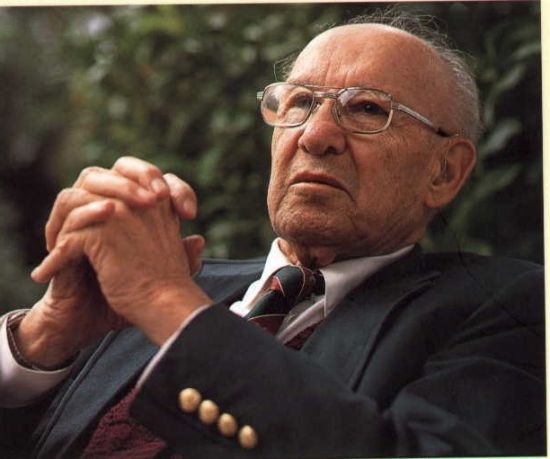
Drucker said, “Innovation is the specific tool of entrepreneurs.” A lot of people think that innovation is invention or scientific discovery. But that's a misunderstanding. Very simply, innovation is the act that endows a resource with economic value. Peter said, “It is the act that endows resources with a new capacity to create wealth...Until then, every plant is a weed and every mineral is just another rock. Not much more than a century ago, neither mineral oil seeping out of the ground nor bauxite, the ore of aluminum, were resources. They were nuisances; both render the soil infertile. The penicillin mold was a pest, not a resource. Bacteriologists went to great lengths to protect their bacterial cultures against contamination by it. Then in the 1920s, a London doctor, Alexander Fleming, realized that this 'pest' was exactly the bacterial killer bacteriologists were looking for–and the penicillin mold became a valuable resource.”
Innovation is vitally important, if somewhat mystical. It is at the heart of the business community's focus on planned obsolescence. As the great Austrian economist, Joseph Schumpeter, said capitalism is, by its very nature, “creative destruction.” And, you don't have to operate out of the Silicon Valley to benefit from these disruptive technologies. All companies should organize themselves to be entrepreneurial. This was put very simply by the French economist J.B. Say around 1800 when he said, “The entrepreneur shifts economic resources out of an area of lower and into an area of higher productivity and greater yield.” Innovation is so important that former Proctor & Gamble CEO, A.G. Lafley, teamed up with Ram Charan to write a book about it. They called it The Game-Changer and, not surprisingly, the book is largely based on Peter Drucker's work.
Drucker was dogmatic in saying that we must implement a systematic approach to innovation. And, as Peter was wont to do, he created that very system. Time does not permit me to get into a full discussion of Drucker's systematic entrepreneurship. However, he did give us something of a short cut. Peter gave a beautiful, single sentence as advice on where to search for innovative opportunities. In his book, Managing For Results, Drucker said to search for, “the future that has already happened.” Meaning, there is always a lag time between when something is proven possible and when it becomes economically profitable. As entrepreneurs, we are well-advised to search for that window of opportunity.
Let me give you two high-tech examples. A gentleman by the name of Tim Berners-Lee invented the World Wide Web in 1990. Between 1990 and 1994 it was the future that had already happened. Then, in 1994, Jim Clark and Marc Andreessen founded a company called Netscape thereby turning the web into a wealth producing innovation. And, in one of the ultimate demonstrations of creative destruction, where is Netscape today?
Around the year 2000 the music industry was full of chicken-littles, predicting their own demise. The reason was that in 1999 a young man named Shawn Fanning had created a file sharing software he called Napster. While the doomsday prophets at the record labels were running around like their heads were cut off, a company in Cupertino, California went to work. In short order, Steve Jobs created iTunes and today Apple Computers basically owns the music industry (along with subsequent streaming services like Spotify). As we all know, iTunes has become a magnificent wealth producing innovation. Apple took advantage of the future that had already happened.
Mr. Drucker said the first place one should look for the future that has already happened is always demographics. Demographics have the most clear implications and the longest lead time. An easy and obvious one is the Baby Boom generation. That the average age of the American population is increasing is the future that has irrevocably happened. Well, actually, I shouldn't say “irrevocably” because another boom could occur. It just hasn't yet. The point is, industries serving the senior population will continue to grow in the coming years. A great place to search for innovative opportunities is with those things that are important and valuable to folks in their golden years.
Another thing we should always do is look to industries and countries other than our own in the search of the future that has already happened. Importing an innovation from another country is exactly what a New York native by the name of Howard Schultz (pictured below) did in 1983. Schultz was in Milan, Italy when he discovered what he would call a “romantic” coffee bar culture. Visiting the coffeehouse is a way of life for Italians and Howard calls it, "the third place." People go to work, people go home, and people go to have a refreshing break with coffee. The innovation that made Schultz a billionaire was when he imported that espresso environment to America. And today, a Starbucks coffeehouse is on just about every corner. I wouldn't advise competing against Starbucks! It was the future that had already happened.
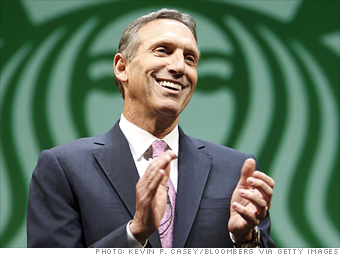
So, as marketers, we don't just satisfy existing, identifiable, and well-established needs. We uncover needs as well. Nobody in America knew they needed (valued) a latte until Howard Schultz came along. Nobody could have imagined the importance of a photocopy, until The Haloid Company went to work. And, could you imagine trying to sell the first fax machine? The prospect says, “Great! But who am I going to fax?”
Jokes aside, a word about ethics. Whether or not it is ethical for P&G to use social pressure to create a taboo out of dandruff is debatable. But, the line seems to clearly have been stepped on when Nestle worked hard to convince mothers, in Africa, that formula was better for their babies than breast milk. Many children perished as a result. Please keep it clean. With great power comes great responsibility.
We, at LegalShield, are doing something very similar to what Howard Schultz did. This legal insurance concept also began in Europe. It started in Le Mans, France in 1917 with a company called D.A.S. As you're reading this, legal insurance is already all over Europe. To give you a few statistics, the market penetration is about 44% in Germany, it's around 59% in the UK and it's north of 90% in Sweden. It truly is the future that is already happening. You see, here in the United States, the current market penetration is less than 5%. As the US catches up to Europe, fortunes will be made. That America will experience the same growth as Europe is basically as inevitable as the fact that the Baby Boomers will get older. Everyone in Italy knew they needed an espresso but nobody in America did. And, most people in Europe know they need legal insurance, while few people in the States do. That is the very essence of an enormous opportunity for people with vision.
When it's all said and done, innovation is about improving customer value. Nobody wants to be forced to buy entire albums any more. What we want is the ability to choose, song by song. Hence iTunes. But innovation doesn't have to come from high-technology. Indeed, most innovations are very low-tech. Howard Schultz didn't reinvent the wheel, he simply borrowed an established idea from Italy.
One of the best and simplest innovations ever comes to us from the far East. Japan had been experiencing a very high rate of automobile accidents and deaths. Upon study, a gentleman by the name of Tamon Iwasa redesigned the traditional highway reflector so that the little glass beads, that serve as its mirror, could be adjusted to reflect the headlights of oncoming cars, from any direction onto any direction. And the accident rate plummeted. People very much value life, hence the enormity of this innocent innovation.
Powerful innovations also come from things as simple and mundane as changing the way you charge for things. You see, Gillette pretty much owns the shaving space and a big reason was a pricing innovation. King Gillette stops selling razors and started selling what people buy, namely, a shave. Meaning, Gillette priced their product per shave not per razor. They sold replacement blades for a nickel and each was good for six or seven uses. A visit to the barber would cost a dime and so a shave with Gillette cost less than one-tenth the price. This was real value to people.
Xerox did a very similar thing when it started charging per copy. A Xerox machine is a technologically advanced piece of equipment but pricing was the true innovation. People don't really care to purchase a photocopy machine, especially at $4,000. What they really want to buy is a photocopy and, a nickel is a great price. Stated differently, people value the photocopy, not the machine that produced it.
Though this is very basic marketing knowledge, a lot of marketers (perhaps most) seem to forget it. Nobody wants a drill bit. What people want is a hole. That something as simple as pricing can be an innovation may come as a surprise to you. But don't let its simplicity trick you into ignoring its power. Like Leonardo da Vinci said, "Simplicity is the ultimate sophistication."
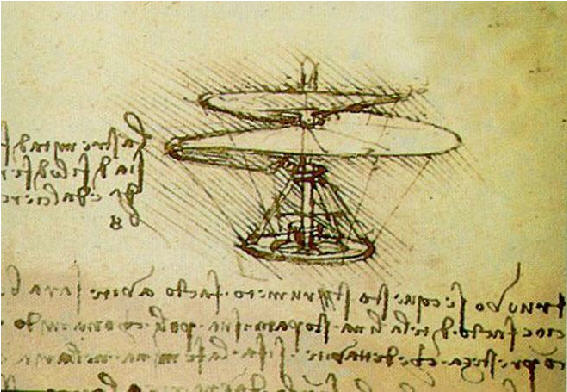
On a side note, speaking of da Vinci, he's practically the poster boy for inventing and not innovating. Have you seen his drawings for things like a parachute, a hang glider, and even a helicopter? They're fascinating! Just for fun, I have included his prototype for a helicopter. But please remember, while it might be very sexy to be ahead of your time, it doesn't provide real value to people. And, you're very unlikely to get wealth because, in business, timing is extremely important. Remember innovation always has, and always will be, about customer value. Regardless of what the wonky, Silicon Valley types might tell you.
Anyways, back to the way we charge for things. The entire health insurance industry is simply a pricing innovation. And talk about powerful! How big is United, Aetna, Humana, and all the rest? They're enormous! It's a trillion dollar industry. In many ways, we at LegalShield are following their lead. Health insurance became an American innovation in 1929 at the Baylor University Hospital in Dallas, Texas. An official at the hospital noticed that Americans spent more on cosmetics than they did on medical care. People spent a few dollars here and a few dollars there on things like lipstick. When the cost is broken down into little increments the expense becomes very manageable.
The goal with health insurance was to do the same thing and make medical costs smaller, more predictable, and thus manageable. When a person has to come out of pocket to pay the full cost of a medical procedure, they understandably avoid all but the most necessary of treatments. They would rather just, "rub some dirt on it," as the old saying goes. But when the expense was amortized into a low, flat, monthly fee people started seeing the doctor for everything under the sun. That's true for doctors and it's true for attorneys as well.
Let me ask you that question again; If attorneys were free, could you make use of them? Do you see how the cost is often a barrier? Most people avoid attorneys the same way they used to avoid doctors. And, that's just too bad. What if you get in a car accident, get married or divorced, have a child custody issue, want to find the answer to a tax question, etc? People have issues ranging from the traumatic to the trivial and they would love to contact an attorney if the price was right. In fact, 93% of people told us they believe lawyers charge too much for their services. That's a real problem and we're fixing it. We do for attorneys what health insurance did for doctors many years ago. And that's make them affordable for everyone!
Let me state what my company does in slightly different terms. Ultimately my company provides consumers with purchasing power. That should excite you. In his phenomenal book, Innovation and Entrepreneurship, Peter Drucker writes, “There is no greater resource in an economy than 'purchasing power'... Installment buying literally transforms economies. Wherever introduced, it changes the economy from supply-driven to demand-driven, regardless almost of the productive level of the economy (which explains why installment buying is the first practice that any Marxist government coming to power immediately suppresses)” So, you better hurry and get in.
In explaining the entrepreneurial process and the future that has already happened, I have given you the vision of this company. It won't be long before the majority of the population owns the LegalShield product. We will be for legal services what Apple Computers is for music. Meaning, we will be the quintessential method for accessing attorneys. So, let me explain our mission and our values.
The mission of our company is as follows, “To make Equal Justice Under Law a reality.” And, we are helping people achieve the American dream of financial and time freedom, through business ownership, in service of that mission.
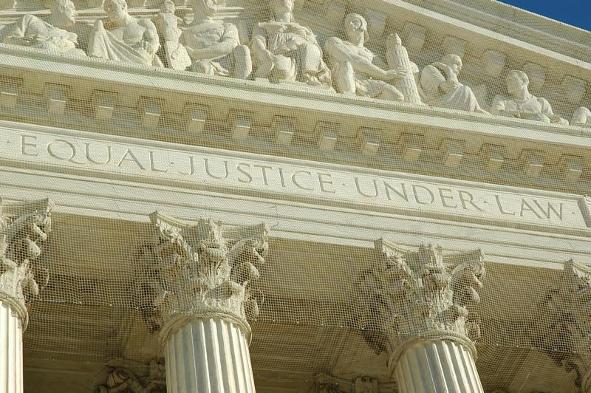
You see, across the entrance to the United States Supreme Court are etched the words, "Equal Justice Under Law." The problem is those words aren't true. In America today, you'll get just as much justice as you can afford. That's a real problem, and we're fixing it. A big solution to a big problem equals big money. I go back to Drucker who said the only genuine profit is the profit of the innovator. The imitators will come, but they rarely cash-in. Big money through business ownership is what equals true freedom. It's the real American dream!
How do we do that? Well, with us you can own a recurring, royalty-type income. You know royalty income, right? It's the income that authors get for their books and musicians get for their songs. It's a big part of the reason there are so many one-hit-wonders in the music business. The hit song made the artist so much money they didn't have to work anymore. An example is that old House of Pain song "Jump Around." For the last 20 years I think I've heard that song at every single professional sporting event I've attended. And, those guys get a royalty every time it plays. Actually, I believe I heard the band sold their publishing rights so they no longer profit. But, that's a story for another time.
What I'm saying is you need to understand the power of a royalty like, passive income. It will keep paying you long after you are done working. It's true freedom. My business has also been compared to a lucrative, cash-flowing piece of investment property. But it doesn't require any of the risky capital expenditures or outlays. Investment property can provide passive income but there's a fair amount of risk. Hence the need for corporations, LLC's, and other forms of risk management. You need to understand, when built properly, my business provides you all the upside of royalty income with essentially zero risk. If you really think about that you'll understand why I'm so stoked on what we're doing.
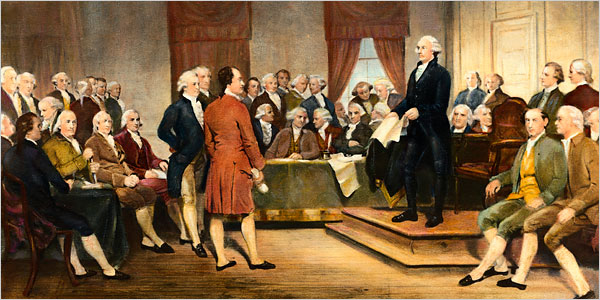
We share the exact same guiding values and principles as the founding fathers of America namely; freedom and equality. LegalShield is the future because it is based on our past. Let me give you a couple thoughts on equality. America is the land of opportunity. For the most part, it's a level playing field. To take a quote from Harvard business professor, Richard Tedlow, America gives everybody, "An equal chance to become unequal." Two keys to America's success are the rule of law and the right of private property. And, both are legal constructs. Indeed America is, fundamentally, a social contract. Constitutionalism is respect for law. Respecting the legal system is a very American thing to do. It's pretty groovy. Giving people access and realizing, "Equal Justice Under Law," is one of the keys to sustaining America's greatest. Human beings yearn for equality and freedom.

On the freedom front, I want you to consider that we are indeed a land of laws deriving from our charter, the Constitution. So, don't kid yourself, you need access to the system, everybody does. The fact is, it is our laws that grant us the freedoms we so cherish. A land without laws is not freedom, it's anarchy. The fact of the matter is, there is no freedom except under law. It's another elegant paradox, much like the da Vinci quote I gave earlier, Schumpeter's creative destruction, and what Tedlow just said. Another way of saying it is, without justice there is no freedom. With LegalShield everyone can gain access to the system, to their freedoms. Talk about innovation! Talk about value!
The market for our product is enormous and, as of right now, it is still untapped. Let me put a couple of numbers on it. We currently have more than one million members here at LegalShield. But the fact of the matter is, there are approximately 100 million families, in American, that need our product. That's why we need you. With 1.4 million memberships, our annual revenues are north of $400 million. So, what will be the annual sales when we get to 100 million memberships? The answer is about $30 billion! To put that in perspective, the NFL generates about $10 billion in annual revenues. And to consider it from less masculine terms, the skin care brand Olay (formerly Oil of Olay) accounts for about $3 billion in sales.
Imagine the lifestyle you can lead if you had a recurring, and passive, six or even seven-figure income. The type of income you don't have to keep working hard to recreate. Just imagine the kind of fun you would have with your life then! And lest you think it's not possible allow me to point again to the future that has already happened. We already have hundreds of people earning in the six-figures. As I've mentioned, the pie is gigantic! Remember, it has already happened in Europe. And experts say, it's definitely happening here as well.
So why, you may ask, did it happen in Europe first? The answer is simple. Do remember how I said the concept began in Le Mans, France? Do you know what the people of Le Mans are crazy for? The answer is, racing cars. Perhaps you've heard of the 24 Hours of Le Mans, it's the world's oldest endurance race. This concept originally began as a way to manage the legal risk associated with driving cars. Specifically, when the cars crash. Driving is one of the riskiest things we humans do. Every time you're behind the wheel it's a huge risk and exposure.
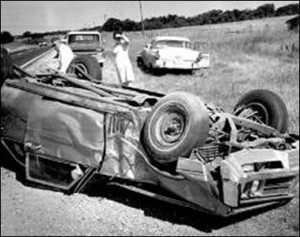
It began, in America, in a very similar way. In 1969 Harland Stonecipher got into a terrible accident (pictured above). The other party was at fault but that person still filed a lawsuit against Mr. Stonecipher. Fortunately, Harland had car insurance to replace his car, health insurance to pay his hospital bills, and life insurance in case the unthinkable were to happen. But he wasn't prepared to handle the unanticipated legal bills. He looked around America for some form of legal coverage, but it didn't exist. So he decided to create it! This thing began in Europe with cars and it began in America with cars. The similarities are simply undeniable.
We are doing very meaningful, fun, and lucrative work. I'm not asking you to change careers, right now, but I do think you should join the crusade. Why spend the rest of your days working so hard at your job when you don't have to? Come join me. And together we'll, “put a dent in the universe.”
Give me a call or use the "contact us" tab,
LegalShield Independent Associate